The Socotra Archipelago, poised between the Gulf of Aden and the Arabian Sea, is a place of rare beauty and extraordinary biodiversity. Organised by the DNHG, and led by environmental expert Ahmed Saeed Suleiman, our trip to Socotra was an unparalleled opportunity to explore a unique natural world. Aside from its rich marine life, Socotra is home to 12 endemic bird species, 28 endemic reptiles and over 300 endemic plants. Notable among these is the Dragon’s Blood Tree (Dracaena cinnabari, Vulnerable), which has become a symbol of the island’s surreal landscape. A designated UNESCO World Heritage Site, Socotra is a sanctuary for threatened species and the last stronghold of an endangered language and culture.
Our adventure began at the conclusion of the IUCN Species Survival Commission (SSC) meetings, hosted by the Environment Agency Abu Dhabi from October 25-28, 2024. Over 300 conservation leaders gathered to issue a declaration “Saving Species Sustains Life” emphasising the urgent need for interconnected solutions to protect biodiversity, stabilise climate and support human wellbeing. As threats continue to emerge and accelerate, the SSC has spurred its efforts maintaining that species conservation is fundamental to the achievement of global sustainability goals. Worldwide, over 46,000 known species are threatened with extinction, although this number could be close to two million, factoring in those as yet undiscovered. Preserving unique ecosystems under threat, such as those present in Socotra, is crucial to achieving the Sustainable Development Goals.
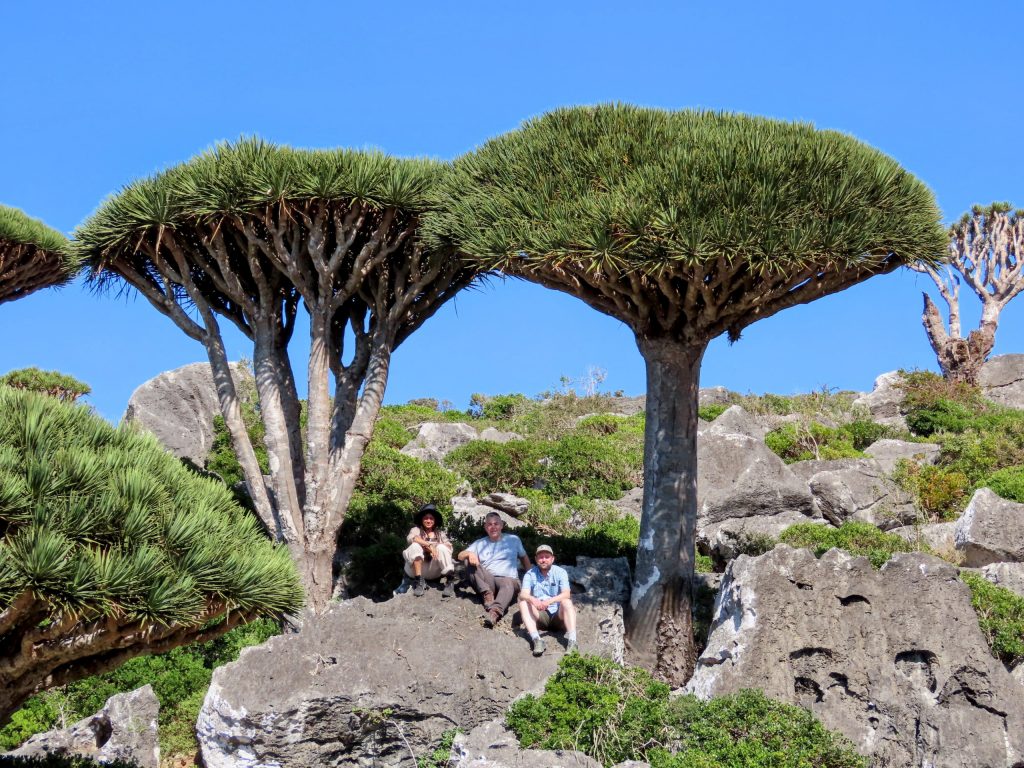
(photo by Thomas Brooks)

Due to a cancellation of our planned return flights, our itinerary was compressed but still took us across the island and a diverse range of habitats. On October 29th we explored the lush Wadi Ayhaft, then headed to Arher Beach on the Eastern coast with its enormous and spectacular dunes. On October 30th we drove inland to the Diksam Plateau, an otherworldly landscape with a forest of Dragon Blood trees and on October 31st we journeyed west to Qalansiyah for a boat trip along the coast, and then made our way back along the north coast. On November 1st we wrapped up the journey by heading back to the airport, replete with our findings, having seen all the endemic birds.

(photo by Thomas Brooks)
On the very first day, we spotted the endemic Socotran Chameleon (Chamaeleo monachus, Near Threatened), the Socotra Buzzard (Buteo socotraensis, Vulnerable) and the Socotra Scops Owl (Otus socotranus, Least Concern). While we hunted with spotlights almost every night for the elusive Nubian Nightjar, ironically, we found an equally beautiful Eurasian Nightjar (Caprimulgus europaeus, Least Concern) in a last-ditch effort on the morning before our flight out. Beyond the iconic species, one of the unique phenomena we observed was crab pyramids, intricately built structures apparently built by the Ocypode saratan, the Red Sea Ghost Crab. Up on the Diksam Plateau, we were delighted to find the endemic damselfly Socotra Bluet (Azuragrion granti, Near Threatened) as well as Socotra Freshwater Crab (Socotrapotamon socotrense, Endangered).
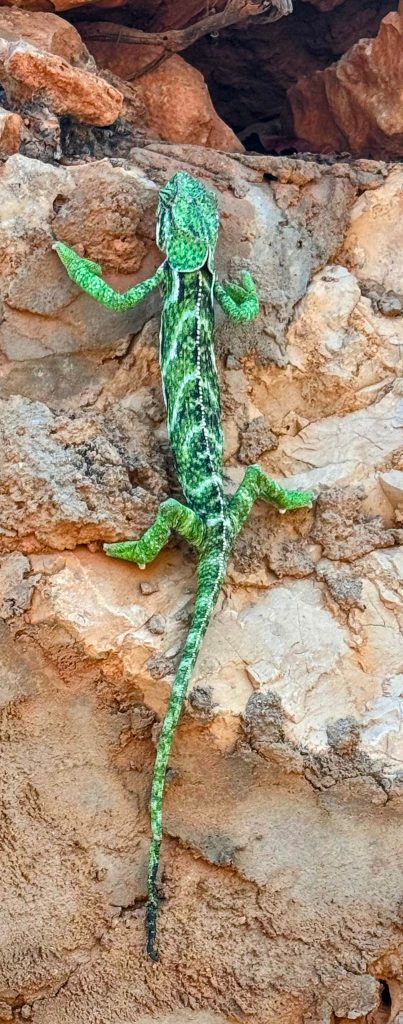
(photo by
Namitha Jassem)
The unique and fragile nature of Socotra’s plants and animals can be seen in the number of Key Biodiversity Areas (KBAs) on the island (i.e. 16, excluding the outer islands). KBAs are recognised as globally important for the persistence of biodiversity and we were fortunate enough to visit six of these in our short time on the island. Indeed, most of the marvellous creatures we came to see live within KBAs. Although this recognition of these sites does not convey any legal protection or management requirement, it does indicate that even within an island as special as Socotra there are small areas where the biodiversity stands out and where future conservation efforts should be directed. Often the greatest hurdle to safeguarding KBAs is making sure governments understand the importance of such sites. It is therefore most encouraging that our guide, Ahmed Saeed Suleiman, who leads the DNHG tours, not only serves as the Wetlands Contact Point for the Environmental Protection Authority of the Ministry of Water and Environment, Republic of Yemen, but is one of the authors of the publication that identified KBAs for Socotra and certainly knows their importance more than anyone.

(photo by Thomas Brooks)
The threats to Socotra’s biodiversity are varied. Like all island-dwellers, Socotra’s species are vulnerable to predatory alien species, such as feral cats. Invasive Small Indian Civets (Viverricula indica, Least Concern) are abundant; we saw thirteen during two evenings of night-torching. While Ahmed thought civet numbers have recently increased, they were apparently introduced onto Socotra many centuries ago and so may now be less of a threat to the island’s surviving species. Ahmed also explained to us how he and colleagues successfully prevented colonisation by House Crows (Corvus splendens, Least Concern), an invasive species scourge of the Arabian and East African coast. Meanwhile, intensification of traditional approaches to both grazing and fishing are placing increasing pressures on the island’s plants and marine fishes.

Saeed Suleiman (left) & Tomas Brooks (right)
(photo by John Lamoreux)
Chris had previously visited Yemen (North Yemen) as a member of the pioneering Ornithological Society of the Middle East’s (OSME) two-month expedition in 1985 and had ever since hoped to visit more of the country, especially Socotra and so this opportunity to visit was one he did not want to miss. As Programme Manager of SAVE (Saving Asia’s Vultures from Extinction) and Co-Chair of the IUCN SSC Vulture Specialist Group, there was the added draw of the globally endangered and locally revered Egyptian Vultures (Neophron percnopterus). Socotra holds the highest concentration of these birds in the world. The population of nearly 2,000 has thus far not been affected by rodenticides or veterinary diclofenac and, hopefully, their abundance will continue to be a feature of any visit. Development pressures will bring their own challenges and climate change also looms as a longer-term threat; for example in exacerbating overgrazing-driven declines in the Dragon’s Blood trees.
Socotra’s cultural heritage is also fascinating – traditional knowledge intertwined with the island’s natural resources. One of the most striking experiences was seeing coral tablets carved with ancient Indian languages, a remnant of Socotra’s mercantile history.
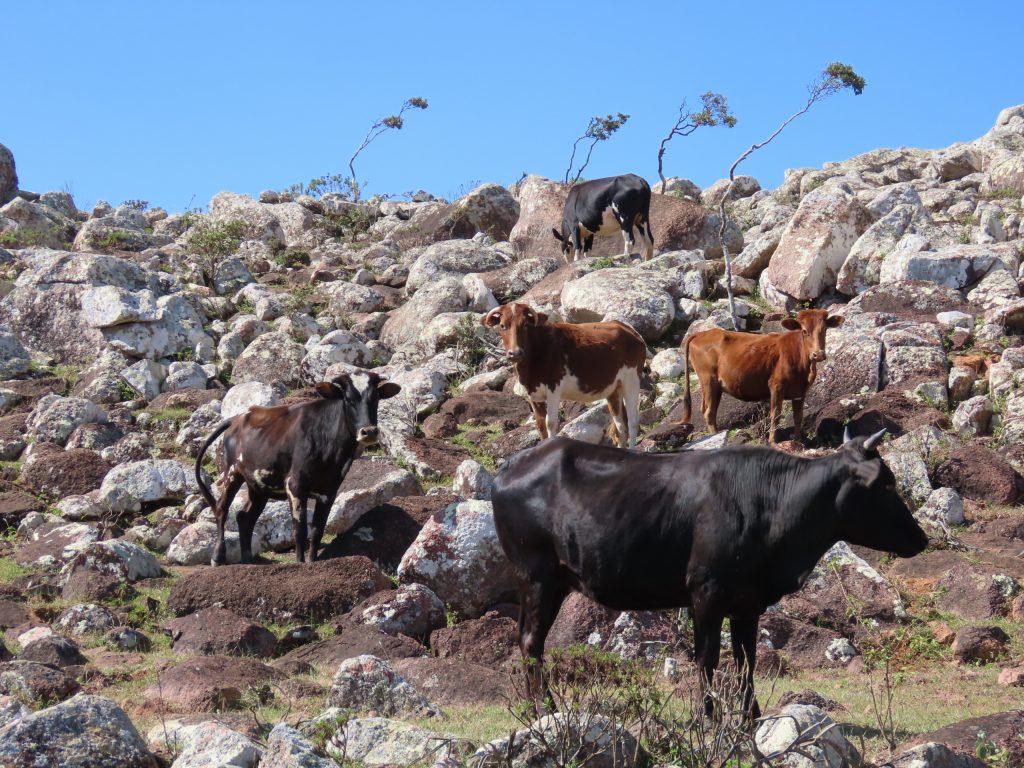
(photo by Thomas Brooks)
The dwarf cattle farmed there most likely came from South Arabia millennia ago and their significance is woven into Soqotri (typically classified as an Afro-Asiatic, Semitic, South Semitic and South Arabian language). The island’s geology is also an intriguing study. A fragment of Gondwanaland, its subsequent isolation from Arabia and Africa presents a unique exploration of tectonic and evolutionary science in the examination of its endemic species. The loss of any one species, apart from its ecological significance, is an irretrievably lost puzzle piece of our shared history.

(photo by John Lamoreaux)
When asked, Richard Porter, a name synonymous with conservation in the Middle East, gave us his top priorities for wildlife conservation in Socotra: “(1) To support, strengthen and empower the Socotra Wildlife Association (SWA) so that it is a force capable of meaningful conservation advocacy – without an active NGO, meaningful conservation is unlikely to happen – and (2) To pursue an Action Plan for Egyptian Vultures (already drafted), especially to ensure that harmful NSAIDs are never used in animal husbandry.”
Our trip would not have been possible without the tireless efforts of Sonja Lavrenčič, Ahmed and his dedicated team.
Their kindness, patience and flexibility in adjusting to unexpected changes made the trip not only possible but incredibly rewarding. We are deeply grateful for their expertise and for making our journey to Socotra a memorable and meaningful experience. We saw all eleven of the Socotra mainland avian endemics despite our short visit and we highly recommend the excursion to anyone with a fascination for natural history and unique cultures, and to deepen an understanding of the need for conservation action.
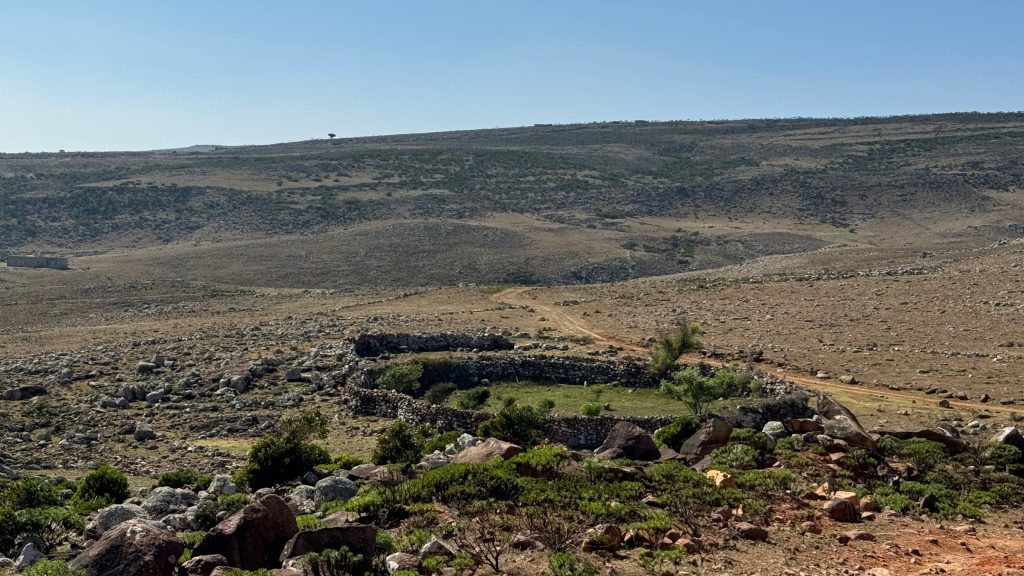
(photo by Thomas Brooks)
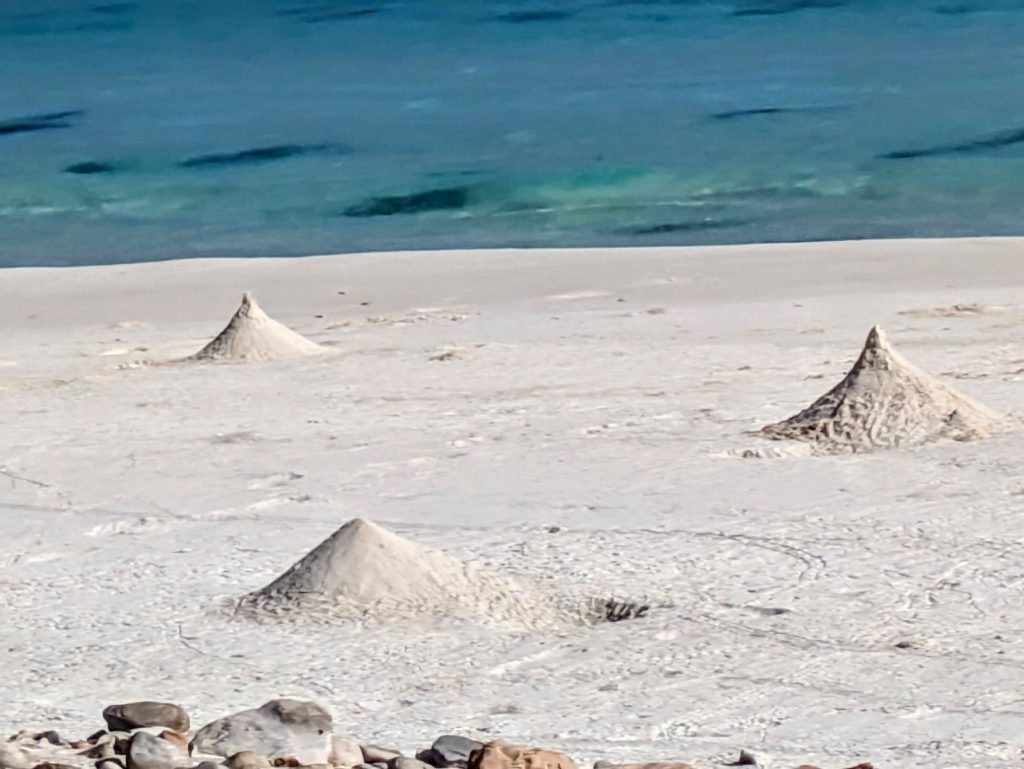
Arhar Beach (photo by Neil Cox)

(photo by Namitha Jassem)
Contribution and photos by Chris Bowden, John Lamoreux, Namitha Jassem, Neil Cox & Thomas Brooks